Understanding how different design roles contribute to digital products is crucial if you’re planning a career move, building a product team, or hiring design talent. Two of the most commonly confused roles are Product Designer and UX Designer. While they overlap in many ways, they’re not identical. Each role carries different responsibilities, focuses on distinct aspects of the product lifecycle, and works with unique business expectations. Knowing these differences helps you choose the right career path or hire the right person to move your product forward.
Main Research
1. Core Focus: Product Outcomes vs. User Experience Quality
Product Designers typically own a broader perspective: they focus on the overall success and viability of the product. That means thinking beyond interfaces to consider revenue, market positioning, roadmaps, and long‑term vision. UX Designers, on the other hand, concentrate primarily on how users interact with a product: how intuitive it feels, how easy tasks are to complete, and how satisfied users are with every step of their journey.
In practice, Product Designers act as connectors between user needs, business strategy, and technical constraints. UX Designers ensure that the solution is usable, accessible, and delightful on a practical, day‑to‑day level. Both contribute to product success, but they measure their impact differently and optimize for slightly different outcomes.
2. Scope of Work: End‑to‑End Product vs. Experience Flow
When it comes to scope, Product Designers are usually involved in the end‑to‑end lifecycle of a product or feature: discovery, definition, design, validation, and often post‑launch iteration based on metrics. That can extend to pricing considerations, value propositions, and how the product fits into a broader ecosystem of tools—like integrating a free invoice generator into a SaaS dashboard to streamline billing for users.
UX Designers typically zoom in on the user journey within that lifecycle. They map flows, define interactions, and refine details at key touchpoints such as onboarding, search, checkout, or account management. Their scope is deep rather than broad: they might own how a single feature works from the user’s perspective, ensuring it is understandable and efficient, even if they’re not directly responsible for how that feature affects the wider business roadmap.
3. Typical Responsibilities and Deliverables
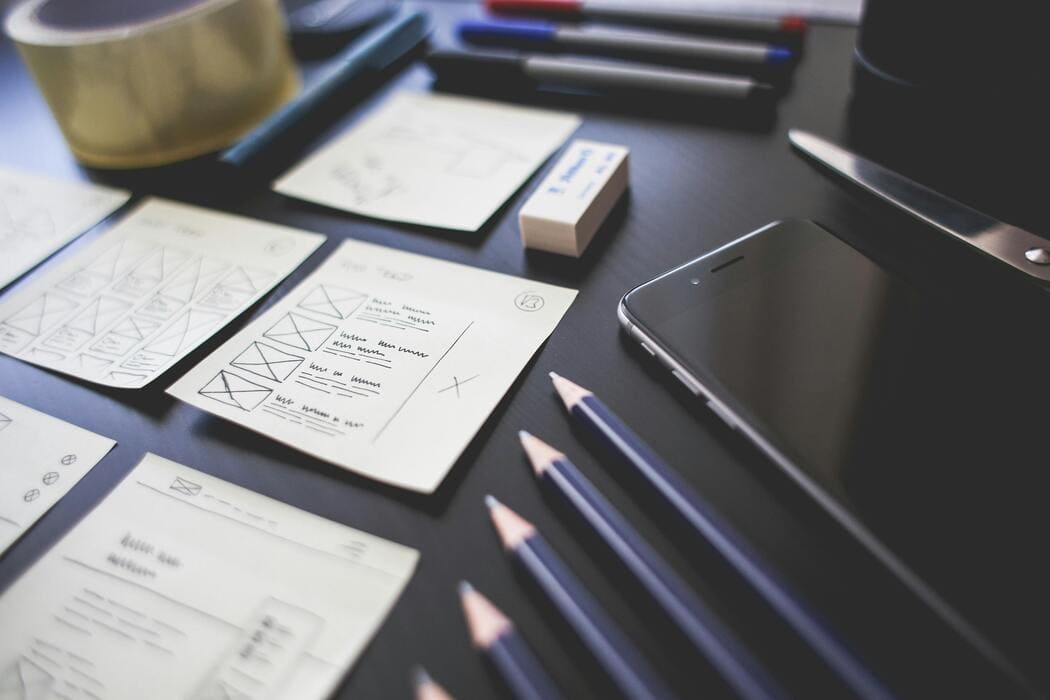
A Product Designer’s deliverables often include product concepts, experience maps, feature prioritization frameworks, and high‑fidelity prototypes that convey not just how something looks, but why it exists and how it ties to business goals. They may create pitch decks, roadmap artifacts, and design systems that support consistency as the product scales. They also help teams answer: “What should we build next, and why?”
UX Designers commonly focus on user flows, wireframes, interaction specifications, and usability test plans and reports. Their artifacts are tightly related to understanding the user’s mental model, reducing friction, and improving ease of use. They answer questions like: “How does a user complete this task?” and “What’s confusing in this interaction, and how do we fix it?” Both roles may produce prototypes and UI designs, but the framing and decisions guiding their work are distinct.
4. Research and Validation Approach
Both Product Designers and UX Designers value user research, but they may approach it with slightly different questions. Product Designers balance user insights with market data, business KPIs, and competitive analysis. They might run discovery interviews, concept tests, and A/B experiments to decide which problems are worth solving and how potential solutions might impact metrics such as activation, retention, or revenue.
UX Designers often apply research techniques with a usability lens: moderated tests, heuristic evaluations, diary studies, and surveys that uncover frustrations, expectations, and behavior patterns around existing interfaces. While Product Designers ask “Is this the right problem and the right solution for the business?”, UX Designers dig into “Is this solution easy, clear, and satisfying for users in practice?”
5. Collaboration with Other Teams
Product Designers tend to collaborate deeply with Product Managers, business stakeholders, marketing, and engineering leadership. They’re frequently involved in roadmap discussions, launch planning, and prioritization trade‑offs. They align stakeholders around a cohesive product vision and help turn that vision into a practical sequence of releases.
UX Designers are often embedded within product squads or feature teams, pairing closely with developers, visual/UI designers, content designers, and QA. Their collaboration is focused on implementation quality: making sure the experience meets usability standards, aligns with the design system, and is correctly interpreted in development. While they may join higher‑level conversations, their main influence is on how ideas get translated into user‑facing details.
6. Metrics and Success Criteria
Success for a Product Designer is often tied to product health metrics: conversion, activation, retention, feature adoption, time‑to‑value, and revenue‑driving behaviors. They’re expected to understand analytics tools and sometimes run experiments to validate hypotheses. Their work is evaluated on both user satisfaction and business impact.
UX Designers primarily look at usability, task success rate, error frequency, time on task, and qualitative satisfaction. While they care about business results, their main mandate is to make the product more usable and enjoyable. A UX Designer might celebrate improvements in completion rates or reduced support tickets for a particular workflow, even if those changes are only indirectly tied to revenue.
7. Skill Sets and Backgrounds
Product Designers usually blend design skills with product thinking and business awareness. They might have experience in UX, UI, or interaction design, but they also speak the language of strategy, market positioning, and value propositions. Many come from UX or visual design and expand their competencies to include product management concepts and experimentation.
UX Designers are grounded in user‑centered design methodologies. Their core strengths often include information architecture, interaction design, prototyping, and user research. They study how people think and behave when using interfaces and keep accessibility and inclusive design at the forefront. While some UX Designers grow into Product Design roles, many prefer to specialize deeply in creating smooth, human‑centered experiences.
8. Career Paths and Growth
In terms of growth, Product Designers may progress into Lead Product Design, Design Strategy, or even Product Management roles. Their wide view of product and business gives them options to move into leadership and cross‑functional decision‑making positions.
UX Designers can advance toward Senior UX Designer, UX Lead, UX Manager, or Research‑heavy roles like UX Researcher, depending on their strengths and interests. They may also branch into specialized areas such as interaction design, information architecture, or service design while keeping a strong focus on the user’s experience end‑to‑end.
Conclusion
While the titles can sometimes blur, Product Designers and UX Designers serve distinct but complementary purposes. Product Designers look at the big picture—how the product solves problems, fits the market, and supports the business—while UX Designers ensure that every interaction within that product is intuitive, efficient, and satisfying. If you’re hiring, clarifying which outcomes you prioritize will help you choose the right role for your team. If you’re building your career, understanding these differences allows you to focus your skills on either broad product ownership or deep user experience expertise—and ultimately contribute more strategically to the products you help create.